

Can a 2D wire bending machine be used for bending household appliance wires?
Leave a message

In the realm of wire processing and manufacturing, the question of whether a 2D wire bending machine can be used for bending household appliance wires is both relevant and practical. As a seasoned supplier of 2D Wire Bending Machine, I am well - versed in the capabilities and limitations of these machines, and I am eager to share my insights on this topic.
Understanding the 2D Wire Bending Machine
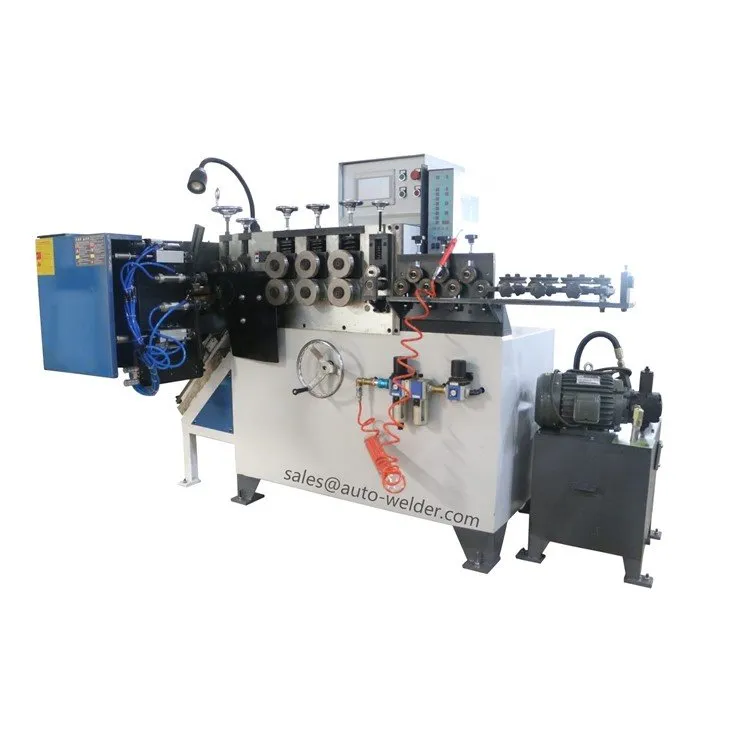
A 2D wire bending machine is a specialized piece of equipment designed to bend wires into various 2D shapes. It operates based on pre - programmed instructions, which control the movement of the bending tools to achieve precise bends at specific angles and locations along the wire. These machines are known for their high precision, repeatability, and efficiency, making them popular in a wide range of industries, from automotive and aerospace to furniture manufacturing.
The basic components of a 2D wire bending machine typically include a wire feeding system, a bending unit, and a control system. The wire feeding system is responsible for delivering the wire to the bending unit at a consistent speed and tension. The bending unit, which consists of various bending tools such as dies and mandrels, performs the actual bending operations. The control system, often a computer - numerical - control (CNC) system, allows operators to program the desired bending patterns and monitor the machine's performance.
Characteristics of Household Appliance Wires
Household appliance wires come in a variety of types, each with its own unique characteristics. For example, power cords are usually made of copper or aluminum conductors insulated with materials such as PVC or rubber. These wires need to be flexible enough to be easily routed around the appliance and to withstand repeated bending and flexing during use.
On the other hand, internal wiring within appliances, such as those used for control circuits or sensor connections, may be thinner and more delicate. They often require precise bending to fit into the limited space inside the appliance and to ensure proper electrical connections.
In addition to flexibility and precision, household appliance wires also need to meet certain safety standards. For instance, they must have adequate insulation to prevent electrical shocks and short - circuits, and they should be able to withstand the temperature and humidity conditions within the appliance.
Can a 2D Wire Bending Machine Be Used?
The answer is a resounding yes. A 2D wire bending machine can be effectively used for bending household appliance wires, and here are the reasons:
Precision
One of the key advantages of a 2D wire bending machine is its ability to achieve high precision. When it comes to household appliance wires, precision is crucial. For example, in the production of small - scale internal wiring, even a slight deviation in the bending angle or position can lead to poor electrical connections or interference with other components inside the appliance. The CNC control system of a 2D wire bending machine allows for accurate programming of bending angles and lengths, ensuring that each wire is bent to the exact specifications required by the appliance design.
Repeatability
Household appliance manufacturing often involves mass production, where large quantities of identical wires need to be bent. A 2D wire bending machine excels in this aspect. Once the bending program is set up, the machine can repeatedly produce wires with the same bending patterns, ensuring consistency in the quality of the wires. This is especially important for maintaining the reliability and performance of the appliances.
Flexibility
2D wire bending machines are highly flexible in terms of the bending shapes they can produce. They can create simple bends, such as right - angle bends, as well as more complex shapes, such as U - shaped or S - shaped bends. This flexibility allows manufacturers to meet the diverse design requirements of different household appliances. For example, a power cord may require a simple 90 - degree bend at one end to fit into the appliance's power socket, while an internal wiring harness may need a series of complex bends to navigate around other components.
Efficiency
In the fast - paced world of household appliance manufacturing, efficiency is key. A 2D wire bending machine can significantly increase the production speed compared to manual bending methods. The automated wire feeding and bending processes reduce the time and labor required for each wire, allowing manufacturers to produce more wires in less time. This not only improves productivity but also reduces production costs.
Applications in Household Appliance Manufacturing
The use of 2D wire bending machines in household appliance manufacturing is widespread. Here are some specific applications:

Refrigerators
In refrigerators, 2D wire bending machines are used to bend the wires for internal control circuits and lighting systems. These wires need to be precisely bent to fit into the narrow spaces between the refrigerator's compartments and around the cooling components. The high precision of the 2D wire bending machine ensures that the wires do not interfere with the operation of the refrigerator and that they can be easily installed during the assembly process.
Washing Machines
Washing machines also rely on 2D wire bending machines for the production of their wiring systems. The power cords and internal control wires need to be bent to specific shapes to connect the various components, such as the motor, the control panel, and the water inlet valve. The repeatability of the 2D wire bending machine ensures that each washing machine produced has the same high - quality wiring, which is essential for the reliable operation of the appliance.
Microwave Ovens
In microwave ovens, 2D wire bending machines are used to bend the wires for the magnetron, the control circuit, and the power supply. These wires need to be bent accurately to ensure proper electrical connections and to prevent electromagnetic interference. The flexibility of the 2D wire bending machine allows for the production of wires with different bending shapes to meet the unique design requirements of microwave ovens.
Complementary Machines in the Production Line
In addition to 2D wire bending machines, other machines may be used in conjunction with them in the household appliance wire production line. For example, Steel Ring Welding Machine and Ring Making And Welding Machines can be used to create wire rings or loops, which may be required for certain types of household appliance wiring. These machines can work together with the 2D wire bending machine to produce more complex wire components.
Conclusion
In conclusion, a 2D wire bending machine is a valuable tool for bending household appliance wires. Its precision, repeatability, flexibility, and efficiency make it well - suited for the requirements of household appliance manufacturing. Whether it is for large - scale production of power cords or the precise bending of internal wiring, a 2D wire bending machine can help manufacturers produce high - quality wires that meet the strict standards of the household appliance industry.
If you are in the household appliance manufacturing industry and are looking for a reliable solution for wire bending, I encourage you to consider our 2D wire bending machines. Our machines are designed with the latest technology and are backed by our experienced technical support team. We are committed to providing you with the best products and services to meet your production needs. Contact us today to start a discussion about your wire bending requirements and explore how our machines can benefit your business.
References
- "Wire Bending Technology Handbook", Industrial Press Inc.
- "Household Appliance Design and Manufacturing", McGraw - Hill Education
- Industry reports on wire processing and household appliance manufacturing


