

What is the minimum bending radius of a 2D wire bending machine?
Leave a message

When it comes to the world of wire processing, the 2D wire bending machine stands as a pivotal piece of equipment, enabling the creation of a vast array of wire - formed products. One of the most critical parameters that users often inquire about is the minimum bending radius of a 2D wire bending machine. As a reliable 2D Wire Bending Machine supplier, I am here to delve deep into this topic and provide you with a comprehensive understanding.
Understanding the Concept of Minimum Bending Radius
The minimum bending radius refers to the smallest radius that a wire can be bent to without causing significant damage such as cracks, fractures, or excessive thinning. This value is crucial as it directly impacts the quality and integrity of the final bent wire products. Different applications require different minimum bending radii. For instance, in the jewelry industry, where delicate and intricate designs are the norm, a smaller minimum bending radius is often needed to create fine - detailed pieces. On the other hand, in construction or industrial applications, the requirements may be more lenient.
Factors Influencing the Minimum Bending Radius
Material Properties
The type of wire material plays a fundamental role in determining the minimum bending radius. Materials with high ductility, such as copper and aluminum, can generally be bent to a smaller radius compared to materials with lower ductility, like high - carbon steel. For example, copper wires can tolerate a bending radius as small as 1 - 2 times the wire diameter, while some high - strength steel wires may require a bending radius of 5 - 10 times the wire diameter to avoid breaking.
Wire Diameter
As a general rule, the larger the wire diameter, the larger the minimum bending radius. This is because larger - diameter wires have more material cross - section, and bending them requires more force. When the bending radius is too small relative to the wire diameter, the outer layer of the wire experiences excessive tensile stress, which can lead to failure. For example, with a thin wire of 1mm diameter, the minimum bending radius might be 2 - 3mm, while for a 10mm diameter wire, the minimum bending radius could be 50 - 100mm.
Machine Design and Capabilities
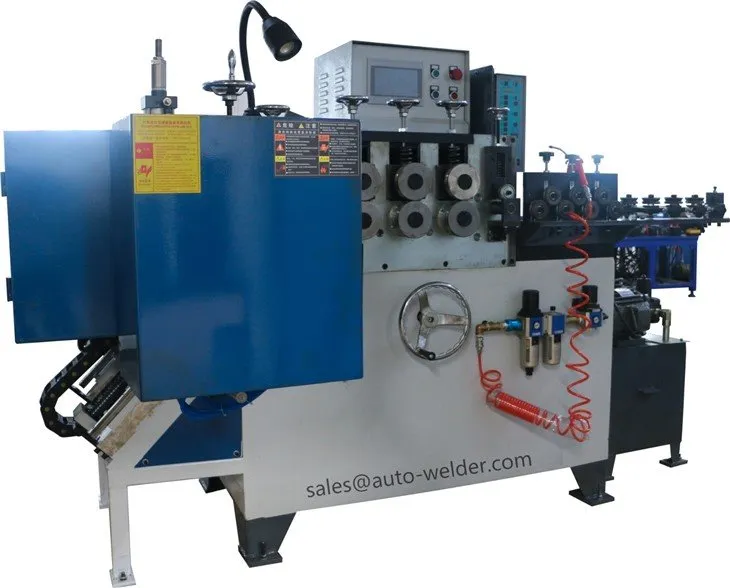
The design and technical specifications of the 2D wire bending machine itself also have a significant impact on the minimum bending radius. Advanced machines are often equipped with precise bending tools and control systems that can achieve smaller bending radii. Our 2D Wire Bending Machine is designed with state - of - the - art technology, allowing for highly accurate and tight bending operations. The machine's bending dies are carefully engineered to ensure smooth bending and minimize the risk of wire damage, enabling it to achieve relatively small minimum bending radii for various wire materials and diameters.
Measuring the Minimum Bending Radius
To accurately determine the minimum bending radius for a specific wire and machine combination, a series of tests are usually conducted. These tests involve gradually reducing the bending radius until the wire shows signs of damage. The radius at which the first visible damage, such as cracks or significant deformation, occurs is considered the minimum bending radius for that particular setup. It is important to note that these tests should be carried out under controlled conditions, with consistent wire tension, bending speed, and other relevant parameters to ensure reliable results.
Importance of Adhering to the Minimum Bending Radius
Maintaining the proper minimum bending radius is essential for several reasons. Firstly, it ensures the structural integrity of the bent wire product. If the bending radius is too small, the wire may crack or break during the bending process or in subsequent use, leading to product failure. Secondly, adhering to the minimum bending radius helps to preserve the mechanical properties of the wire. Excessive bending can cause work - hardening, which may alter the wire's strength, ductility, and other performance characteristics. Finally, it can enhance the aesthetic quality of the final product. A wire bent with the appropriate radius will have a smooth and uniform appearance, which is especially important in applications such as jewelry and decorative wire products.
Application - Specific Minimum Bending Radius Requirements
Jewelry Making
In the jewelry industry, precision and aesthetics are of utmost importance. Jewelry designers often require 2D wire bending machines to achieve very small bending radii to create intricate designs such as rings, necklaces, and earrings. Our Ring Making And Welding Machines are specifically tailored to meet these demanding requirements, allowing for the production of high - quality jewelry pieces with fine details.
Industrial Manufacturing
In industrial settings, 2D wire bending machines are used to produce a wide range of components, such as wire racks, springs, and fasteners. Each application has its own specific minimum bending radius requirements based on the function and performance of the final product. For example, wire racks used in storage applications may require a relatively larger bending radius to ensure sufficient strength and stability, while springs may need a more precise and smaller bending radius to achieve the desired elastic properties.
Construction
In the construction industry, wire is often used for reinforcement and structural purposes. The minimum bending radius requirements for construction wires are typically determined by building codes and engineering standards. Our machines can be adjusted to meet these specific requirements, ensuring that the bent wire products used in construction projects are safe and reliable. For instance, our Steel Ring Welding Machine can be used to produce steel rings with the appropriate minimum bending radius for construction reinforcement.
How Our 2D Wire Bending Machines Excel in Achieving Small Minimum Bending Radii
Our company has long been committed to research and development to improve the performance of our 2D wire bending machines. We use high - quality materials to manufacture the bending dies, which are heat - treated and precisely machined to ensure excellent wear resistance and dimensional accuracy. This allows the machines to maintain consistent performance even when bending wires to small radii.
In addition, our machines are equipped with advanced control systems that can accurately adjust the bending force, speed, and angle. By precisely controlling these parameters, we can minimize the stress on the wire during the bending process, thereby achieving smaller minimum bending radii without sacrificing the quality of the bent wire.

Conclusion and Call to Action
Understanding the minimum bending radius of a 2D wire bending machine is crucial for anyone involved in wire processing. Whether you are in the jewelry industry, industrial manufacturing, or construction, choosing the right machine with the appropriate minimum bending radius capabilities is essential for producing high - quality products.
As a leading 2D Wire Bending Machine supplier, we are dedicated to providing our customers with the best - in - class machines that meet their specific requirements. If you are interested in learning more about our products or have any questions regarding the minimum bending radius or other aspects of wire bending, please feel free to contact us for a detailed consultation. We are looking forward to discussing your needs and helping you find the most suitable wire bending solution.
References
- Smith, J. (2018). Wire Bending Technology: Principles and Applications. Industrial Press.
- Johnson, A. (2020). The Impact of Material Properties on Wire Bending. Journal of Materials Processing.
- Brown, C. (2019). Advanced Control Systems for 2D Wire Bending Machines. Manufacturing Technology Review.


