

What is the welding speed in Flash Butt Welding?
Leave a message

Flash butt welding is a widely used welding process in various industries, known for its efficiency and ability to join two pieces of metal end - to - end. One of the critical parameters in flash butt welding is the welding speed. In this blog, as a flash butt welding supplier, I'll delve into what welding speed means in flash butt welding, its influencing factors, and its significance.
What is Welding Speed in Flash Butt Welding?
Welding speed in flash butt welding refers to the rate at which the two metal pieces are brought together and welded during the process. It is typically measured in millimeters per second (mm/s) or inches per minute (ipm). This speed determines how quickly the joint is formed and can have a profound impact on the quality and strength of the weld.
During flash butt welding, there are two main phases: the flashing phase and the upsetting phase. The welding speed is related to both these phases. In the flashing phase, an electrical current is passed through the two metal ends, causing them to heat up and create an arc. The metal pieces are then gradually brought closer together at a controlled speed. This is the initial part of the welding process where the surface impurities are removed, and the metals start to soften. The speed at which this approach occurs is an important aspect of the overall welding speed.
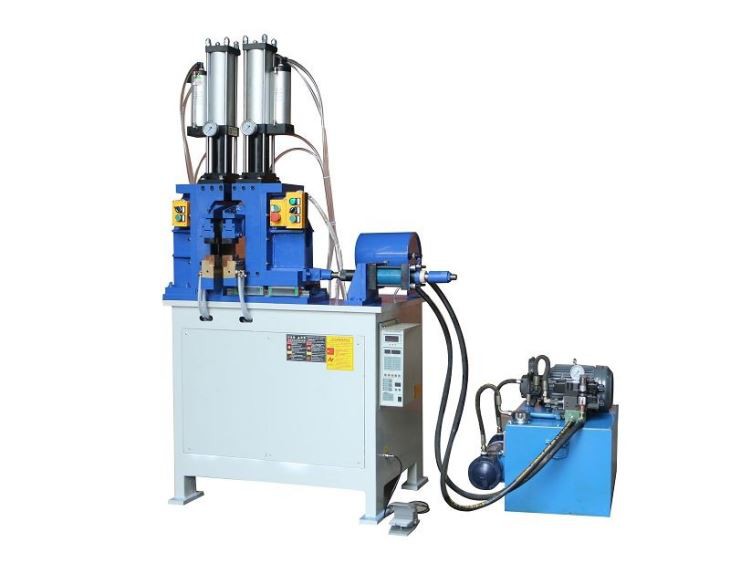

In the upsetting phase, once the metal ends are sufficiently heated, they are forced together rapidly under high pressure. The speed of this final pressing action is also a part of the welding speed concept. A proper combination of the speeds in these two phases is crucial for a successful flash butt weld.
Influencing Factors on Welding Speed
Material Properties
The type of metal being welded has a significant influence on the welding speed. Different metals have different thermal conductivities, melting points, and electrical resistivities. For example, metals with high thermal conductivity, like copper, dissipate heat quickly. This means that during flash butt welding, the heat generated may not be retained effectively, and a slower welding speed might be required to ensure that the metal reaches the necessary temperature for proper fusion. On the other hand, metals with lower thermal conductivity, such as stainless steel, can hold heat better, allowing for potentially higher welding speeds.
The thickness and cross - sectional area of the metal pieces also matter. Thicker or larger cross - section parts require more heat input to reach the welding temperature. As a result, the welding speed may need to be reduced to ensure that the entire cross - section is adequately heated.
Equipment Capabilities
The power of the welding machine is a key factor. A more powerful flash butt welding machine can supply a higher electrical current, which in turn can generate more heat. This enables faster heating of the metal pieces and potentially allows for a higher welding speed. For instance, our Flash Butt Welding Machine is designed with high - power capabilities, which can support relatively high welding speeds for a wide range of metal materials and sizes.
The mechanical system of the welding machine, including the drive mechanism for moving the metal pieces together, also affects the welding speed. A well - designed and precise drive system can ensure smooth and accurate movement at the desired speed.
Joint Design
The design of the joint, such as the shape and fit of the metal ends, can impact the welding speed. If the ends are not properly prepared or have an irregular shape, it may take longer to achieve a uniform heating and proper alignment during the flashing phase. This can slow down the overall welding process. A well - machined and precisely fitting joint allows for a more efficient and faster welding operation.
Significance of Welding Speed
Productivity
Welding speed is directly related to productivity. In a manufacturing environment, a higher welding speed means that more welds can be completed in a given time. This is especially important for large - scale production where time is of the essence. For example, in the production of Steel Bar Butt Welder, a faster welding speed can significantly increase the output of welded steel bars per day, reducing production time and costs.
Weld Quality
An appropriate welding speed is essential for achieving good weld quality. If the welding speed is too fast, the metal may not be heated enough, resulting in incomplete fusion. This can lead to weak joints with poor mechanical properties, such as low tensile strength and fatigue resistance. On the other hand, if the welding speed is too slow, excessive heat may be applied, causing the metal to overheat. This can lead to grain growth, which can also degrade the mechanical properties of the weld and may cause distortion of the welded parts.
Our Solutions as a Flash Butt Welding Supplier
As a professional flash butt welding supplier, we understand the importance of welding speed and its influencing factors. Our Flash Butt Welding Machine is equipped with advanced control systems that allow for precise adjustment of the welding speed. Our engineers can work closely with customers to determine the optimal welding speed based on the specific metal materials, joint designs, and production requirements.
We also offer Steel Ring Butt Welding Machine and Steel Bar Butt Welder that are designed to provide consistent and high - quality welds at appropriate welding speeds. Our machines are built with high - power electrical systems and reliable mechanical drive mechanisms to ensure smooth and efficient welding operations.
Conclusion
Welding speed in flash butt welding is a complex yet crucial parameter that is influenced by multiple factors such as material properties, equipment capabilities, and joint design. It plays a vital role in both productivity and weld quality. As a flash butt welding supplier, we are committed to providing high - quality welding machines and technical support to help our customers achieve the optimal welding speed for their specific applications.
If you are in need of flash butt welding solutions or have any questions regarding welding speed and our products, we encourage you to contact us for a detailed discussion and potential procurement. We look forward to working with you to meet your welding needs.
References
- Kou, S. (2003). Welding Metallurgy. John Wiley & Sons.
- AWS Welding Handbook: Volume 2 - Welding Processes. American Welding Society.


