

What is the difference between single - phase and three - phase butt welding equipment?
Leave a message

When it comes to butt welding equipment, understanding the difference between single - phase and three - phase systems is crucial for both manufacturers and end - users. As a supplier of butt welding equipment, I've witnessed firsthand how the choice between these two types can significantly impact the welding process, efficiency, and overall performance. In this blog, I'll delve into the key differences between single - phase and three - phase butt welding equipment to help you make an informed decision for your welding needs.
Power Supply and Voltage
The most fundamental difference between single - phase and three - phase butt welding equipment lies in their power supply. A single - phase power supply is the most common type of electrical power used in residential and small - scale commercial applications. It consists of a single alternating current (AC) waveform, typically with a voltage of 120V or 240V in North America and 230V in many other parts of the world.
On the other hand, a three - phase power supply is commonly used in industrial settings. It consists of three separate AC waveforms that are out of phase with each other by 120 degrees. The standard voltage for three - phase systems can vary, but common values include 208V, 480V in North America, and 400V in Europe.
The higher voltage and power capacity of three - phase systems allow for more efficient and powerful welding operations. Single - phase butt welding equipment is generally more suitable for light - duty applications where lower power requirements are sufficient, such as welding small - diameter rods or thin sheets. For instance, if you are working on a DIY project at home or a small workshop, a single - phase Bandsaw Blade Butt Welder might be a great choice. It can handle the relatively low - power demands of joining bandsaw blades.
However, for heavy - duty industrial applications like welding large steel bars or thick plates, three - phase butt welding equipment is essential. The Steel Bar Butt Welder that operates on a three - phase power supply can deliver the high power needed to create strong and reliable welds in these materials.
Welding Performance
The power supply type also has a direct impact on the welding performance of butt welding equipment. Three - phase butt welding machines offer more consistent and stable power delivery compared to single - phase machines. The three - phase power system provides a smoother and more continuous flow of energy, which results in better weld quality.
In single - phase welding, the power fluctuates with the AC waveform, which can lead to variations in the welding current and voltage. This fluctuation may cause uneven heating of the workpieces, resulting in inconsistent welds. For example, in some cases, the weld may be too weak in certain areas or have an irregular appearance.
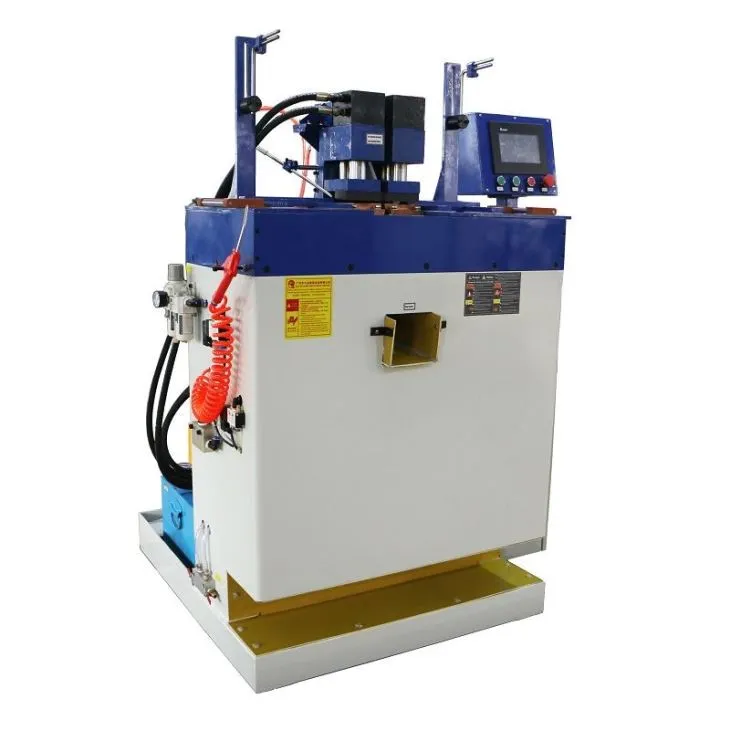
In contrast, three - phase welding equipment maintains a more constant power output. This stability ensures uniform heating of the workpieces, leading to stronger and more reliable welds. The consistent power also allows for faster welding speeds, increasing productivity in industrial settings. A Flash Butt Welding Machine using a three - phase power supply can quickly and efficiently join large - scale workpieces, reducing production time and costs.
Equipment Size and Cost
Single - phase butt welding equipment is generally smaller and more compact compared to three - phase machines. This is because single - phase systems require less complex electrical components and have lower power requirements. The smaller size makes single - phase equipment more portable and easier to install in limited - space environments. It is also more cost - effective in terms of the initial purchase price. For small businesses or hobbyists with a tight budget, a single - phase welding machine can be an affordable option to start with.
On the other hand, three - phase butt welding equipment is larger and more expensive. The additional electrical components and higher - power capacity make the machines bulkier and more complex. However, the long - term benefits of three - phase equipment, such as increased productivity and better weld quality, often justify the higher upfront cost for industrial users.
Installation and Maintenance
Installing single - phase butt welding equipment is relatively straightforward. Since it uses a standard single - phase power supply, it can be easily connected to a regular electrical outlet in most cases. This simplicity makes it accessible for users with limited electrical knowledge. Maintenance of single - phase machines is also generally less complicated, as they have fewer components.
Three - phase butt welding equipment requires a more complex installation process. A dedicated three - phase electrical system needs to be installed, which may involve hiring a professional electrician. The higher voltage and power also mean that safety precautions are more critical during installation and operation. Maintenance of three - phase machines can be more involved due to their complexity, but proper maintenance is essential to ensure optimal performance and longevity.
Application Considerations
When choosing between single - phase and three - phase butt welding equipment, it's important to consider the specific applications. If you are mainly working on small - scale projects with low - power requirements, such as jewelry making, small - part fabrication, or home - based DIY projects, a single - phase machine will likely meet your needs.
For industrial applications such as automotive manufacturing, construction, and large - scale metal fabrication, three - phase butt welding equipment is the preferred choice. These industries require high - quality welds, high productivity, and the ability to handle large - scale workpieces.
In conclusion, the choice between single - phase and three - phase butt welding equipment depends on several factors, including power requirements, welding performance, equipment size, cost, installation, and application. As a supplier of butt welding equipment, I can offer professional advice to help you select the most suitable equipment for your specific needs. Whether you need a single - phase Bandsaw Blade Butt Welder for light - duty work or a three - phase Steel Bar Butt Welder for heavy - duty industrial applications, we have a wide range of products to meet your requirements.
If you are interested in purchasing butt welding equipment or have any questions about our products, please feel free to contact us for a detailed consultation. We are committed to providing high - quality welding solutions and excellent customer service.

References
- "Welding Handbook", American Welding Society
- "Principles of Electric Welding", various industry - specific textbooks on electrical welding technology.


