

What are the types of butt welding equipment?
Leave a message

What are the types of butt welding equipment?
As a supplier of Butt Welding Equipment, I am often asked about the different types of this essential machinery. Butt welding is a process where two pieces of metal are joined end - to - end, and there are several types of equipment designed for this purpose, each with its own unique features and applications.
Flash Butt Welding Machines
Flash butt welding is one of the most common methods of butt welding. In this process, the two workpieces are brought into contact under pressure, and an electric current is passed through them. The resistance at the joint causes the metal to heat up and melt, creating a weld.
The Flash Butt Welding Machines are highly versatile and can be used for a wide range of materials, including steel, aluminum, and copper. They are capable of producing high - quality welds with excellent strength and durability. These machines are often used in industries such as automotive, construction, and manufacturing. For more information about our Flash Butt Welding Machines, you can visit our Butt Welding Equipment page.
Bandsaw Blade Butt Welder
A specialized type of butt welding equipment is the Bandsaw Blade Butt Welder. Bandsaw blades are used in a variety of cutting applications, and they need to be joined accurately to ensure smooth and efficient operation.
The Bandsaw Blade Butt Welder is designed specifically for welding the ends of bandsaw blades together. It uses a precise welding process to create a strong and seamless joint. This type of welder is crucial for bandsaw blade manufacturers and repair shops. Our Bandsaw Blade Butt Welder is engineered to provide high - precision welding, ensuring that the bandsaw blades have a long service life and consistent cutting performance.
Steel Bar Butt Welder
In the construction and manufacturing industries, steel bars are often used in large quantities. Joining these steel bars efficiently and reliably is of utmost importance. This is where the Steel Bar Butt Welder comes into play.
The Steel Bar Butt Welder is designed to weld steel bars of different diameters and lengths. It uses advanced welding technology to ensure a strong and uniform weld. These welders can significantly increase the productivity of construction projects by quickly joining steel bars on - site. Whether it's for building bridges, high - rise buildings, or industrial structures, our Steel Bar Butt Welder is a reliable choice.
Hydraulic Butt Welding Machines
Hydraulic butt welding machines use hydraulic power to apply pressure during the welding process. This type of equipment offers several advantages, such as precise control of the welding pressure and force. The hydraulic system allows for smooth and consistent operation, resulting in high - quality welds.
Hydraulic butt welding machines are suitable for welding thick - walled pipes and large - diameter workpieces. They are commonly used in the oil and gas industry, where the integrity of the welds is critical for the safe transportation of fluids. The ability to adjust the hydraulic pressure according to the specific requirements of the workpiece makes these machines very flexible and adaptable.
Resistance Butt Welding Machines
Resistance butt welding machines work on the principle of electrical resistance heating. When an electric current is passed through the workpieces, the resistance at the contact point generates heat, which melts the metal and forms a weld.
These machines are known for their simplicity and efficiency. They are often used for welding small - to - medium - sized workpieces, such as wires, rods, and small metal components. Resistance butt welding machines are cost - effective and can be easily integrated into production lines. They are widely used in the electronics, automotive, and jewelry industries.
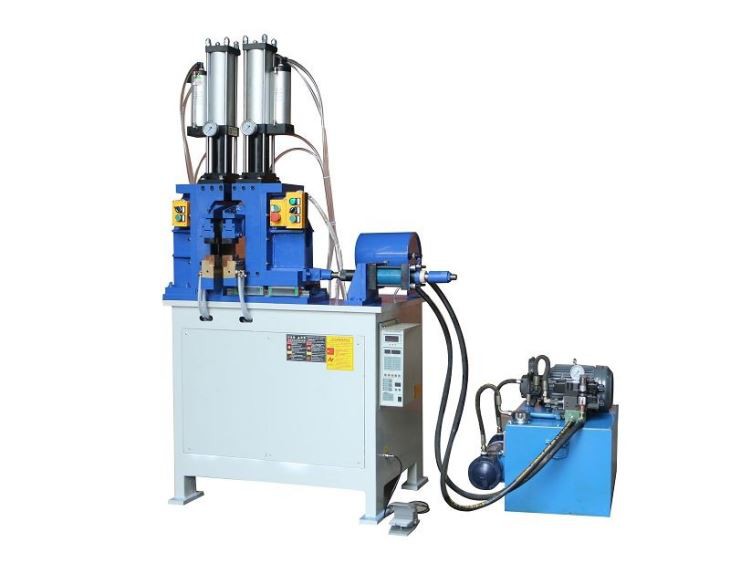

Pneumatic Butt Welding Machines
Pneumatic butt welding machines use compressed air to apply pressure during the welding process. They are relatively lightweight and easy to operate. Pneumatic systems provide quick response times, allowing for rapid welding cycles.
These machines are suitable for applications where portability and ease of use are important. They are commonly used in small - scale manufacturing and repair workshops. Pneumatic butt welding machines can be used for welding a variety of materials, including plastics and non - ferrous metals.
Ultrasonic Butt Welding Machines
Ultrasonic butt welding is a non - traditional welding method that uses high - frequency ultrasonic vibrations to create a weld. In this process, the ultrasonic energy is transferred to the workpieces, causing the molecules to vibrate and generate heat at the joint.
Ultrasonic butt welding machines are mainly used for welding plastics and some non - metallic materials. They are known for their clean and precise welding results. These machines are often used in the medical, packaging, and electronics industries, where the quality of the weld and the integrity of the materials are crucial.
Laser Butt Welding Machines
Laser butt welding machines use a high - energy laser beam to melt and join the workpieces. Laser welding offers several advantages, such as high precision, minimal heat - affected zone, and the ability to weld difficult - to - reach areas.
These machines are used in high - tech industries, such as aerospace, electronics, and medical device manufacturing. Laser butt welding machines can weld a wide range of materials, including stainless steel, titanium, and aluminum. They are capable of producing very fine and strong welds, which are essential for high - performance applications.
Choosing the Right Butt Welding Equipment
When choosing the right butt welding equipment, several factors need to be considered. The type of material to be welded is one of the most important factors. Different materials have different melting points, electrical conductivities, and mechanical properties, which require different welding processes and equipment.
The size and shape of the workpieces also play a crucial role. Large - scale workpieces may require heavy - duty welding machines, while small - sized components can be welded using more compact equipment. The production volume is another important consideration. For high - volume production, automated welding machines may be more suitable, while for low - volume or custom - made work, manual or semi - automated machines may be a better choice.
Conclusion
In conclusion, there are many types of butt welding equipment available, each with its own unique features and applications. As a supplier of Butt Welding Equipment, we are committed to providing our customers with high - quality, reliable, and efficient welding solutions. Whether you are a large - scale manufacturer or a small - scale workshop, we have the right equipment to meet your needs.
If you are interested in learning more about our butt welding equipment or have specific requirements for your welding projects, please feel free to contact us. We look forward to discussing your needs and providing you with the best - suited butt welding equipment for your operations.
References
- Welding Handbook, American Welding Society
- Principles of Welding Technology, John Wiley & Sons
- Industrial Welding Processes, McGraw - Hill Education


