

What are the technological parameters of a tube reducing machine?
Leave a message

Hey there! As a supplier of Tube Reducing Machines, I often get asked about the technological parameters of these nifty pieces of equipment. So, I thought I'd sit down and write a blog post to break it all down for you.
First off, let's talk about what a Tube Reducing Machine is. In simple terms, it's a machine that's used to reduce the diameter of a tube. This process is crucial in various industries, like automotive, aerospace, and manufacturing. It helps in creating tubes with the right dimensions for different applications. If you want to learn more about Tube Reducing Machines, you can check out this Tube Reducing Machine link.
Now, let's dive into the technological parameters. One of the most important parameters is the reduction ratio. This is the ratio of the initial diameter of the tube to the final diameter after the reduction process. For example, if you start with a tube that has a diameter of 50mm and end up with a tube that has a diameter of 25mm, the reduction ratio is 2:1. The reduction ratio can vary depending on the machine and the specific requirements of the job. Some machines can achieve high reduction ratios, while others are better suited for smaller reductions.
Another key parameter is the maximum and minimum tube diameter that the machine can handle. This is important because you need to make sure that the machine can work with the tubes you're using. Most Tube Reducing Machines have a range of diameters they can handle. For instance, a machine might be able to work with tubes that have a minimum diameter of 10mm and a maximum diameter of 100mm. Knowing these limits helps you choose the right machine for your project.
The speed of the machine is also a crucial parameter. The speed at which the tube is reduced can affect the quality of the final product and the overall efficiency of the process. Faster speeds can lead to higher production rates, but they might also require more precise control to ensure a good quality reduction. On the other hand, slower speeds can give you more control but might result in lower production rates. The speed of the machine is usually measured in terms of the feed rate, which is the speed at which the tube is fed into the machine.
The power of the machine is another factor to consider. The power of the machine determines how much force it can apply during the reduction process. Machines with higher power can handle thicker and stronger tubes, while machines with lower power are better suited for thinner tubes. The power is usually measured in kilowatts (kW). For example, a small Tube Reducing Machine might have a power of 2kW, while a larger industrial machine could have a power of 10kW or more.
The accuracy of the machine is also very important. You want the machine to be able to reduce the tube to the exact diameter you need. The accuracy is usually measured in terms of the tolerance, which is the amount of variation that is allowed from the desired diameter. For example, if you need a tube with a diameter of 20mm and the tolerance is ±0.1mm, the final diameter of the tube should be between 19.9mm and 20.1mm. A machine with a high level of accuracy will produce tubes that meet your specifications more consistently.
The type of drive system used in the machine is another parameter to look at. There are different types of drive systems, such as hydraulic, electric, and mechanical. Hydraulic drive systems are known for their high power and smooth operation. They can apply a large amount of force and are often used in heavy-duty applications. Electric drive systems are more energy-efficient and easier to control. They are commonly used in smaller machines and applications where precision is important. Mechanical drive systems are simple and reliable, but they might not be as powerful as hydraulic or electric systems.
The material of the dies used in the machine is also significant. The dies are the parts of the machine that come into contact with the tube and shape it during the reduction process. Different materials have different properties, such as hardness, wear resistance, and heat resistance. For example, tungsten carbide dies are very hard and wear-resistant, making them suitable for high-volume production. Steel dies are more common and are a good choice for general-purpose applications.
In addition to these parameters, there are other features that might be important depending on your specific needs. Some machines come with automatic control systems that can adjust the parameters based on the tube being processed. This can make the process more efficient and reduce the chances of errors. Other machines might have a built-in cooling system to prevent overheating during the reduction process.
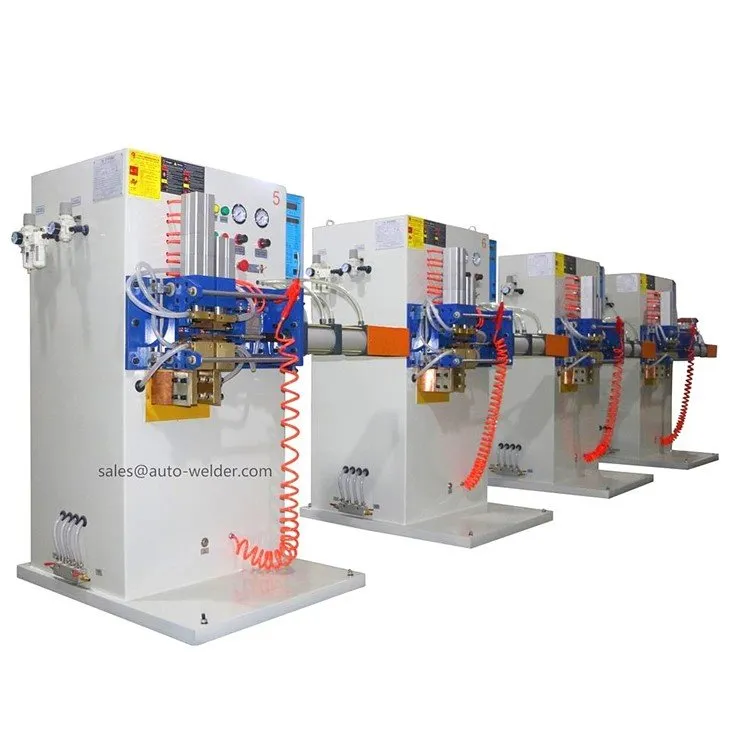
If you're in the market for a Tube Reducing Machine, it's important to understand these technological parameters so you can choose the right machine for your needs. And if you're also interested in other related machines, like Compressor Pipe Butt Welder or Air Conditioning Pipe Butt Welder, we've got you covered.
If you have any questions or want to discuss your specific requirements for a Tube Reducing Machine, don't hesitate to reach out. We're here to help you find the perfect machine for your business. Whether you're a small workshop or a large industrial company, we can provide you with the right solution.
So, if you're ready to take your tube processing to the next level, let's start a conversation. We can work together to find the best Tube Reducing Machine for your needs and ensure that you get the most out of your investment.

References:
- General knowledge about tube reducing machines from industry experience.
- Technical manuals of various tube reducing machines.


