

What is the maximum width of bandsaw blades that a bandsaw blade butt welder can weld?
Leave a message

Hey there! As a supplier of Bandsaw Blade Butt Welders, I often get asked a really important question: "What is the maximum width of bandsaw blades that a bandsaw blade butt welder can weld?" Well, let's dive right into this topic and break it down.
Understanding Bandsaw Blade Butt Welders
First off, let's quickly go over what a bandsaw blade butt welder does. It's a piece of equipment that joins the ends of a bandsaw blade together to form a continuous loop. This is crucial for the proper functioning of the bandsaw, as a seamless loop ensures smooth cutting operations. There are different types of butt welders out there, but they all serve this basic purpose.

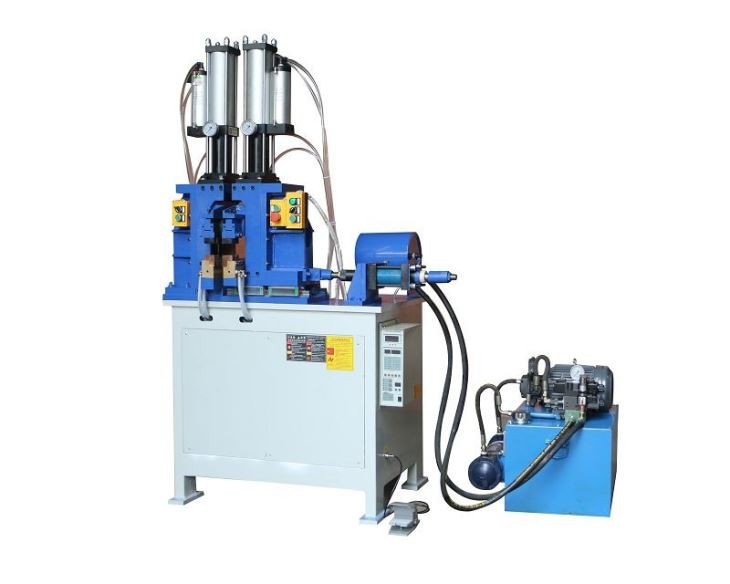
Now, when it comes to the maximum width of bandsaw blades that these welders can handle, it's not a one - size - fits - all answer. It depends on several factors, and we'll explore those in detail.
Factors Affecting the Maximum Weldable Width
Welder Design and Capacity
The design of the bandsaw blade butt welder plays a huge role. Some welders are built with a more robust structure and higher power output, which allows them to handle wider blades. For example, industrial - grade welders are often designed to weld wider blades compared to smaller, hobby - level ones. The capacity of the welder's power supply and the strength of its clamping mechanisms are also key here. A welder with a powerful power supply can generate enough heat to melt and fuse wider blades, while strong clamping mechanisms ensure that the blade ends are held firmly in place during the welding process.
Blade Material
The material of the bandsaw blade is another important factor. Different materials have different melting points and welding characteristics. For instance, high - speed steel (HSS) blades are commonly used in industrial applications. These blades require more heat to weld compared to carbon steel blades. So, a welder that can handle a certain width of carbon steel blade might not be able to handle the same width of an HSS blade. The chemical composition of the blade material also affects the quality of the weld. Some materials may require special welding techniques or additional filler materials to achieve a strong and reliable weld.
Welding Technique
The welding technique used also impacts the maximum weldable width. There are several welding techniques available for bandsaw blade butt welding, such as flash butt welding. Flash butt welding is a popular method where the blade ends are brought into contact and an electric current is passed through them. The resistance between the blade ends generates heat, which melts the metal and forms a weld. The parameters of the flash butt welding process, such as the current intensity, welding time, and upset force, need to be carefully adjusted depending on the blade width and material.
Typical Maximum Widths
In general, hobby - level bandsaw blade butt welders can usually handle blades with a maximum width of around 1 - 2 inches. These welders are suitable for small - scale projects and home workshops. On the other hand, industrial - grade welders can handle much wider blades. Some high - end industrial welders can weld blades up to 6 inches or even wider. These welders are commonly used in large manufacturing facilities where they need to weld wide blades for heavy - duty cutting operations.
Our Range of Bandsaw Blade Butt Welders
As a supplier, we offer a wide range of bandsaw blade butt welders to meet different customer needs. Our welders are designed with the latest technology and high - quality components to ensure reliable performance.
For those who are just starting out or have small - scale projects, we have our entry - level welders. These welders are easy to use and can handle blades with a maximum width of up to 2 inches. They are perfect for hobbyists and small workshops.
If you're in an industrial setting and need to weld wider blades, our industrial - grade welders are the way to go. These welders are built to last and can handle blades with widths of up to 6 inches or more. They come with advanced features such as adjustable welding parameters, automatic clamping systems, and digital controls for precise welding.
Related Products and Their Links
If you're interested in other types of butt welding equipment, we also have some great options. Check out our Butt Welding Equipment. It includes a variety of machines for different applications. We also have a Steel Bar Butt Welder that is specifically designed for welding steel bars. And if you're looking for a more general - purpose flash butt welding solution, our Flash Butt Welding Machine is a great choice.
Conclusion and Call to Action
So, to answer the question "What is the maximum width of bandsaw blades that a bandsaw blade butt welder can weld?", it really depends on the welder design, blade material, and welding technique. As a supplier, we have a range of welders to suit different needs, whether you're a hobbyist or an industrial user.
If you're in the market for a bandsaw blade butt welder or have any questions about our products, don't hesitate to reach out. We're here to help you find the right solution for your welding needs. Whether you need to weld narrow blades for a small project or wide blades for heavy - duty industrial applications, we've got you covered.
References
- "Welding Handbook", American Welding Society
- "Industrial Welding Technology", various industry publications


