

What is the difference between butt welding equipment and other welding equipment?
Leave a message

Welding is a fundamental process in manufacturing and construction, playing a crucial role in joining materials to create structures and products. Among the various welding methods and equipment available, butt welding equipment stands out with its unique characteristics and applications. As a supplier of butt welding equipment, I have witnessed firsthand the differences between butt welding equipment and other welding equipment. In this blog, I will delve into these differences to help you understand when and why to choose butt welding equipment.
Principles of Welding
Before we explore the differences, it's essential to understand the basic principles of welding. Welding is a process that joins materials, usually metals or thermoplastics, by causing coalescence. This is often done by melting the workpieces and adding a filler material to form a pool of molten material (the weld pool) that cools to become a strong joint. Different welding methods use various heat sources, such as electric arcs, lasers, or gas flames, and different techniques to achieve this coalescence.
Common Types of Welding Equipment
There are several common types of welding equipment, each with its own set of advantages and limitations.
Arc Welding Equipment
Arc welding is one of the most widely used welding processes. It uses an electric arc to create enough heat to melt the metals being joined. Equipment such as stick welders, MIG (Metal Inert Gas) welders, and TIG (Tungsten Inert Gas) welders fall into this category. Stick welders are simple and portable, making them suitable for outdoor and repair work. MIG welders are fast and efficient, commonly used in automotive and manufacturing industries. TIG welders offer high-quality, precise welds, often used for thin materials and in applications where appearance is important.
Gas Welding Equipment
Gas welding uses a flame produced by the combustion of a fuel gas, such as acetylene, mixed with oxygen. This type of welding is relatively inexpensive and easy to learn. It is often used for brazing, soldering, and welding thin sheets of metal. However, gas welding has a lower heat concentration compared to arc welding, which can result in slower welding speeds and larger heat-affected zones.
Resistance Welding Equipment
Resistance welding involves passing an electric current through the workpieces to generate heat at the joint. Spot welders and seam welders are common types of resistance welding equipment. Spot welders create individual weld spots, typically used in automotive body assembly. Seam welders produce continuous welds, suitable for applications such as fuel tanks and pipes.
Butt Welding Equipment
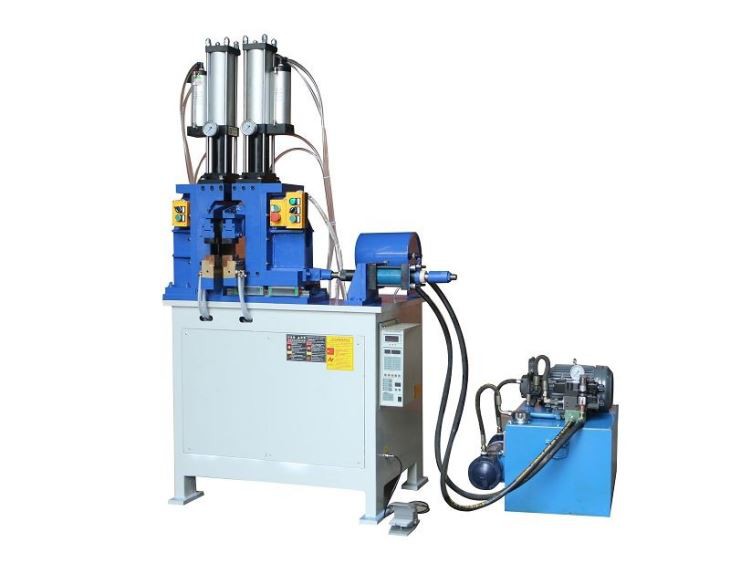
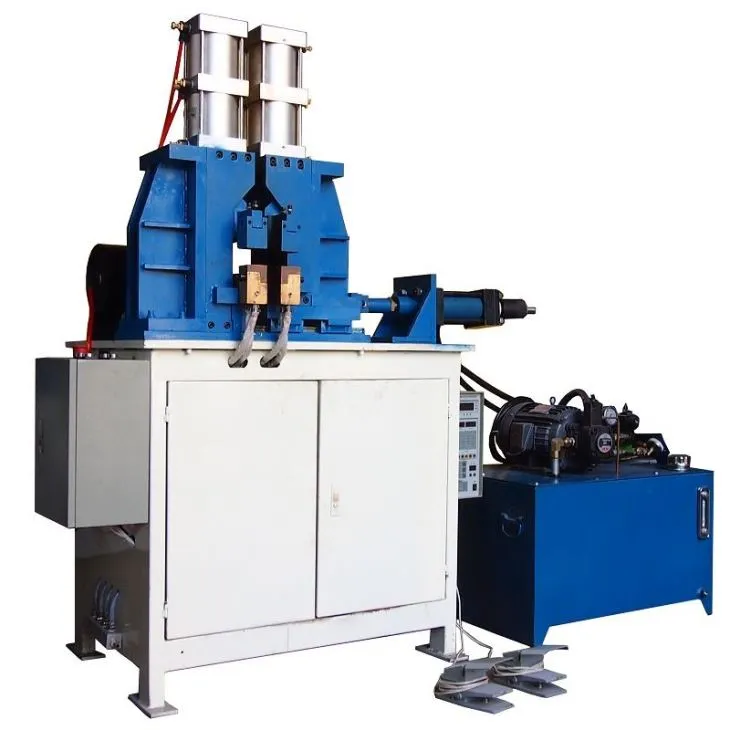
Butt welding is a specific type of welding where the ends of two workpieces are joined together. Butt welding equipment is designed to apply pressure and heat to the ends of the workpieces to create a strong, continuous joint. There are different types of butt welding equipment, including flash butt welding machines, upset butt welding machines, and friction butt welding machines.
Flash Butt Welding Machine
A Flash Butt Welding Machine is a popular type of butt welding equipment. It works by bringing the two workpieces into contact under pressure and then passing an electric current through them. As the current flows, the ends of the workpieces heat up and start to melt. A small amount of metal is then ejected in the form of flashes, which helps to clean the joint surfaces. Once the proper temperature is reached, the workpieces are forced together to form a solid weld. Flash butt welding is commonly used for joining bars, rods, and rails.
Steel Bar Butt Welder
A Steel Bar Butt Welder is a specialized type of flash butt welding machine designed specifically for joining steel bars. It is widely used in construction projects, such as the fabrication of reinforced concrete structures. Steel bar butt welders can handle bars of different diameters and can produce high-quality, reliable welds quickly and efficiently.
Steel Ring Butt Welding Machine
A Steel Ring Butt Welding Machine is used to weld the ends of steel rings together to form a continuous loop. This type of equipment is commonly used in the manufacturing of conveyor belts, chains, and other circular components. Steel ring butt welding machines are designed to ensure precise alignment and a strong, uniform weld around the circumference of the ring.
Differences between Butt Welding Equipment and Other Welding Equipment
Joint Configuration
One of the main differences between butt welding equipment and other welding equipment lies in the joint configuration. Butt welding is specifically designed for joining the ends of two workpieces together in a straight line. This results in a continuous, seamless joint that is often stronger than the base material itself. In contrast, other welding methods, such as arc welding and gas welding, can be used to join workpieces in various configurations, including lap joints, T-joints, and corner joints.
Heat Application
Butt welding equipment applies heat directly to the ends of the workpieces, creating a concentrated heat source at the joint. This allows for rapid heating and melting of the material, resulting in a fast welding process. Other welding methods, such as gas welding, have a more diffuse heat source, which can lead to slower welding speeds and larger heat-affected zones. The concentrated heat in butt welding also minimizes the distortion of the workpieces, making it suitable for applications where dimensional accuracy is critical.
Weld Quality
Butt welding typically produces high-quality, reliable welds with excellent mechanical properties. The continuous joint created by butt welding provides a uniform distribution of stress, reducing the risk of fatigue failure. In addition, the flash and upsetting process in flash butt welding helps to remove impurities from the joint, resulting in a cleaner, stronger weld. Other welding methods may require additional post-weld treatments, such as grinding or polishing, to achieve the same level of weld quality.
Productivity
Butt welding equipment is generally more productive than other welding equipment. The fast heating and welding process, combined with the ability to handle large workpieces, allows for high-volume production. For example, a steel bar butt welder can join multiple bars in a short period of time, making it ideal for large-scale construction projects. Other welding methods may be more time-consuming, especially when welding large or complex workpieces.
Application Scope
Butt welding equipment is commonly used in industries where long, continuous joints are required, such as construction, automotive, and rail manufacturing. It is particularly suitable for joining bars, rods, tubes, and rings. Other welding methods have a broader application scope and can be used in a variety of industries and for different types of materials and joint configurations.
Conclusion
In conclusion, butt welding equipment offers several advantages over other welding equipment, including a specific joint configuration, concentrated heat application, high weld quality, high productivity, and a specialized application scope. As a supplier of butt welding equipment, I understand the unique needs of our customers and can provide them with the right equipment for their specific applications.
If you are in the market for butt welding equipment or have any questions about our products, I encourage you to contact us for a consultation. Our team of experts is ready to assist you in finding the best solution for your welding needs. Whether you are a small workshop or a large manufacturing company, we have the experience and expertise to help you achieve your goals.
References
- AWS Welding Handbook, American Welding Society
- Welding: Principles and Applications, Larry Jeffus


