

What is the effect of the electrode material on the welding quality of a bandsaw blade butt welder?
Leave a message

Hey there! As a supplier of Bandsaw Blade Butt Welders, I've been getting a lot of questions lately about the effect of electrode material on welding quality. So, I thought I'd sit down and write this blog to share some insights.
Let's start by understanding the basics. A bandsaw blade butt welder is a crucial piece of equipment in the manufacturing and repair of bandsaw blades. It works by joining the ends of the blade together using heat generated from an electrical current. The electrodes play a vital role in this process as they conduct the current to the blade ends.
Now, different electrode materials have different properties, and these properties can have a significant impact on the welding quality.
Copper Electrodes
Copper is one of the most commonly used electrode materials in bandsaw blade butt welders. Why? Well, copper has excellent electrical conductivity. This means that it can efficiently transfer the electrical current to the blade ends, generating the heat needed for welding. The high conductivity also helps in reducing energy loss during the welding process, which can save on electricity costs in the long run.

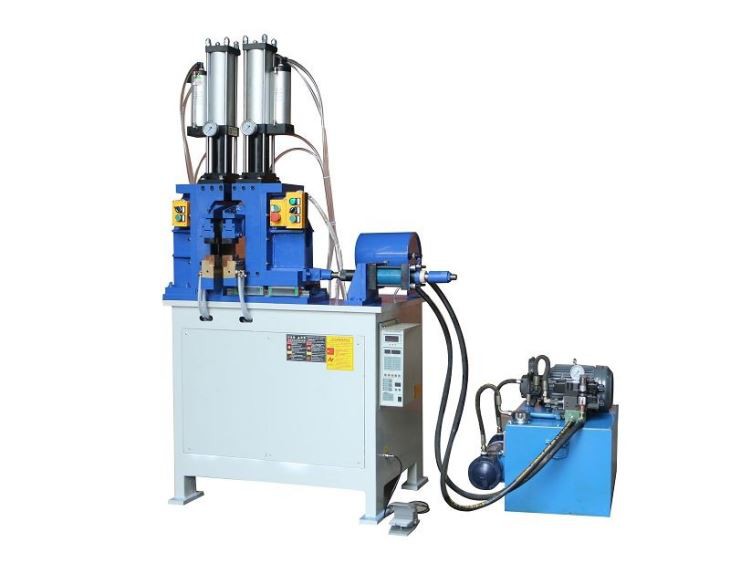
Another great thing about copper electrodes is their good thermal conductivity. During welding, a lot of heat is generated at the welding point. Copper can quickly dissipate this heat, preventing overheating of the electrodes and the blade. This helps in maintaining a stable welding temperature, which is crucial for achieving a high - quality weld.
However, copper electrodes also have some drawbacks. They are relatively soft compared to some other materials. This means that they can wear out more quickly, especially when welding hard or abrasive bandsaw blades. As the electrodes wear, their shape can change, which can affect the uniformity of the current distribution and ultimately the quality of the weld.
Tungsten - Copper Alloy Electrodes
Tungsten - copper alloy electrodes are a popular alternative to pure copper electrodes. These electrodes combine the best of both worlds. The tungsten component provides high hardness and wear resistance. This means that tungsten - copper alloy electrodes can withstand the wear and tear of welding hard bandsaw blades much better than pure copper electrodes.
The copper in the alloy still retains its excellent electrical and thermal conductivity properties. So, just like copper electrodes, tungsten - copper alloy electrodes can efficiently transfer current and dissipate heat. This results in a more stable welding process and a better - quality weld, even when welding challenging blade materials.
One of the downsides of tungsten - copper alloy electrodes is their cost. They are generally more expensive than pure copper electrodes. But if you're regularly welding hard bandsaw blades, the longer lifespan of these electrodes can offset the higher initial cost.
Graphite Electrodes
Graphite electrodes are also used in some bandsaw blade butt welders, especially for specific applications. Graphite has a high melting point, which means it can withstand very high temperatures without melting. This is useful when welding bandsaw blades that require a lot of heat to form a proper weld.
Graphite is also a good electrical conductor. It can effectively transfer the electrical current to the blade ends. However, graphite electrodes are quite brittle. They can break easily if not handled carefully, and they also have a relatively high rate of wear. This can make them less practical for continuous, high - volume welding operations.
Impact on Welding Quality
The choice of electrode material can have a direct impact on several aspects of welding quality.
Weld Strength
The right electrode material can ensure a strong and reliable weld. For example, tungsten - copper alloy electrodes, with their ability to maintain a stable welding process, can create a weld that has good mechanical strength. A strong weld is essential for the performance of the bandsaw blade, as it needs to withstand the stresses of cutting operations.
On the other hand, if the electrodes wear out too quickly or cannot transfer the current evenly, the weld may be weak. A weak weld can lead to blade breakage during use, which can be dangerous and costly.
Weld Appearance
The electrode material can also affect the appearance of the weld. Copper electrodes, with their smooth surface and good current distribution, can often produce a clean and uniform weld. In contrast, if the electrodes are worn or damaged, the weld may have irregularities, such as uneven bead formation or porosity. A good - looking weld not only looks professional but can also indicate a well - executed welding process.
Weld Consistency
Consistency is key in bandsaw blade manufacturing. Using the appropriate electrode material can help in achieving consistent welds from one blade to another. For instance, if you're using tungsten - copper alloy electrodes, their wear resistance ensures that the welding conditions remain relatively constant over a large number of welding operations. This results in blades with consistent quality, which is highly valued by customers.
When considering the electrode material for your bandsaw blade butt welder, it's also important to think about the type of bandsaw blades you'll be welding. If you're mainly dealing with soft or medium - hardness blades, pure copper electrodes may be a cost - effective choice. But if you're working with hard or abrasive blades, tungsten - copper alloy electrodes may be worth the investment.
As a Bandsaw Blade Butt Welder supplier, I've seen firsthand how the choice of electrode material can make or break the welding quality. That's why I always recommend our customers to carefully consider their specific needs and the properties of different electrode materials before making a decision.
If you're in the market for a high - quality bandsaw blade butt welder, or if you're looking for more information on electrode materials, feel free to reach out. We're here to help you make the best choice for your business.
And if you're also interested in other types of butt welding machines, you can check out our Steel Bar Butt Welder, Rebar Butt Welding Machine, and Steel Ring Butt Welding Machine.
We're always open to discussing your requirements and providing solutions that fit your needs. Whether you're a small workshop or a large manufacturing plant, we can offer the right bandsaw blade butt welder and advice on electrode materials to ensure top - notch welding quality. So, don't hesitate to contact us for a purchase negotiation.
References
- "Welding Handbook", American Welding Society
- "Electrode Materials for Resistance Welding", Welding Journal
- "Advanced Welding Processes", Industrial Press Inc.


