

What are the factors affecting the performance of a spot welding machine?
Leave a message

As a supplier of spot welding machines, I've witnessed firsthand the critical role these machines play in various industries, from automotive manufacturing to electronics assembly. The performance of a spot welding machine is not just a matter of technical specifications; it's a complex interplay of multiple factors that can significantly impact the quality, efficiency, and reliability of the welding process. In this blog, I'll delve into the key factors that affect the performance of a spot welding machine, providing insights that can help you make informed decisions when choosing and operating these essential tools.
1. Electrical Parameters
Current
The welding current is one of the most crucial factors in spot welding. It directly determines the heat generated at the welding interface. A higher current will produce more heat, which can lead to stronger welds. However, excessive current can also cause overheating, expulsion of molten metal, and damage to the workpieces. On the other hand, insufficient current may result in weak welds that fail to meet the required strength standards.
The optimal current value depends on several factors, including the material type, thickness, and the electrode size. For example, welding thicker materials or materials with high electrical resistance typically requires a higher current. As a supplier, we offer a range of spot welding machines that can be adjusted to deliver the appropriate current for different applications. Our Portable Spot Welding Machine is designed with adjustable current settings, allowing users to fine - tune the welding process according to their specific needs.
Voltage
Voltage is closely related to the current in a spot welding circuit. It provides the driving force for the current flow. In general, the voltage across the electrodes should be sufficient to maintain a stable arc and ensure proper current flow. However, too high a voltage can cause arcing and damage to the electrodes and workpieces.
Modern spot welding machines often use advanced power control systems to regulate the voltage and current precisely. These systems can adapt to changes in the welding conditions, such as variations in the workpiece thickness or surface condition, to maintain a consistent welding quality. Our Precision Spot Welder is equipped with state - of - the - art power control technology, which ensures accurate voltage and current regulation for high - quality spot welding.
Welding Time
The duration of the welding current flow, known as the welding time, is another critical parameter. It affects the amount of heat input into the workpieces. A longer welding time allows more heat to be transferred, which can improve the weld strength. However, if the welding time is too long, it can cause excessive heat - affected zones, distortion of the workpieces, and increased electrode wear.
The optimal welding time is determined by the material properties, thickness, and the desired weld quality. For thin materials, a shorter welding time is usually sufficient, while thicker materials may require a longer welding time. Our spot welding machines come with adjustable welding time settings, enabling users to optimize the welding process for different applications.
2. Material Properties
Electrical Resistance
The electrical resistance of the workpieces is a fundamental factor that affects the heat generation during spot welding. Materials with high electrical resistance, such as stainless steel and nickel alloys, generate more heat for a given current compared to materials with low resistance, like copper and aluminum.
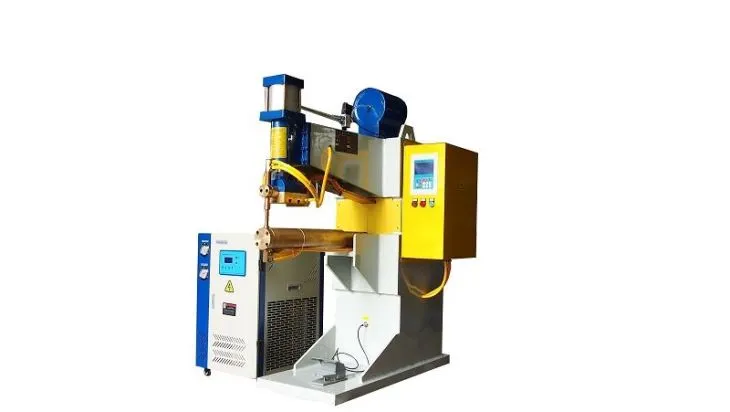

When welding materials with different electrical resistances, such as dissimilar metals, special considerations are required. The difference in resistance can lead to uneven heat distribution, which may result in poor weld quality. Our Aluminium Spot Welding Machine is specifically designed to handle the unique electrical resistance properties of aluminum, ensuring reliable and high - quality welds.
Thermal Conductivity
Thermal conductivity refers to the ability of a material to conduct heat. Materials with high thermal conductivity, like copper, dissipate heat quickly, making it more challenging to achieve a strong weld. In contrast, materials with low thermal conductivity, such as stainless steel, retain heat better, which can be beneficial for spot welding.
To compensate for the high thermal conductivity of some materials, higher welding currents or longer welding times may be required. Additionally, proper electrode design and cooling systems can help to manage the heat transfer during the welding process.
Surface Condition
The surface condition of the workpieces has a significant impact on the spot welding performance. Contaminants such as oil, rust, paint, or oxide layers can increase the electrical resistance at the welding interface, leading to inconsistent heat generation and poor weld quality.
Before welding, it is essential to clean the workpiece surfaces thoroughly. This can be done through mechanical cleaning methods, such as grinding or sandblasting, or chemical cleaning methods, such as degreasing and pickling. Our technical support team can provide guidance on the best surface preparation methods for different materials to ensure optimal welding results.
3. Electrode Design and Condition
Electrode Material
The choice of electrode material is crucial for the performance of a spot welding machine. Electrodes must have good electrical and thermal conductivity, high hardness, and resistance to wear and deformation. Common electrode materials include copper alloys, such as chromium - copper and zirconium - copper.
Copper - based electrodes are widely used due to their excellent electrical and thermal conductivity. Chromium - copper electrodes offer good hardness and wear resistance, making them suitable for high - volume welding applications. Zirconium - copper electrodes have better resistance to softening at high temperatures, which is beneficial for welding materials that require high welding currents.
Electrode Shape and Size
The shape and size of the electrodes affect the distribution of the welding current and the heat transfer at the welding interface. Different electrode shapes, such as flat, domed, and pointed, are used for different applications. Flat electrodes are commonly used for general - purpose spot welding, while domed electrodes are suitable for welding curved surfaces.
The electrode size also plays a role in the welding performance. Larger electrodes can distribute the current over a larger area, which can reduce the current density and prevent excessive heat generation. However, larger electrodes may also require higher welding currents. Our spot welding machines are compatible with a variety of electrode shapes and sizes, allowing users to choose the most appropriate electrodes for their specific applications.
Electrode Wear
Over time, electrodes will wear due to the high - temperature and high - pressure conditions during spot welding. Worn electrodes can cause inconsistent weld quality, such as variations in weld strength and size. Regular inspection and replacement of electrodes are necessary to maintain the performance of the spot welding machine.
We offer a range of high - quality replacement electrodes for our spot welding machines. Our electrodes are designed to have a long service life and provide consistent welding performance.
4. Machine Maintenance and Calibration
Regular Maintenance
Proper maintenance of the spot welding machine is essential for its long - term performance. This includes cleaning the machine regularly to remove dust, debris, and welding spatter. The electrical connections should be checked for tightness and corrosion, and the cooling system should be inspected to ensure proper operation.
Lubrication of moving parts, such as the electrode holders and the welding gun mechanism, is also important to prevent wear and ensure smooth operation. Our technical support team can provide detailed maintenance guidelines and schedules to help users keep their spot welding machines in optimal condition.
Calibration
Periodic calibration of the spot welding machine is necessary to ensure accurate and consistent performance. Calibration involves checking and adjusting the electrical parameters, such as current, voltage, and welding time, to ensure they meet the specified values.
Our spot welding machines are factory - calibrated to ensure high - quality performance. However, over time, due to factors such as component wear and environmental conditions, recalibration may be required. We offer calibration services to our customers, ensuring that their machines continue to operate at peak performance.
Conclusion
The performance of a spot welding machine is influenced by a multitude of factors, including electrical parameters, material properties, electrode design and condition, and machine maintenance and calibration. As a supplier of spot welding machines, we are committed to providing high - quality products and comprehensive technical support to help our customers achieve optimal welding results.
If you are in the market for a spot welding machine or need advice on improving the performance of your existing machine, we invite you to contact us for a detailed discussion. Our team of experts can help you select the right machine for your specific needs and provide guidance on operating and maintaining it effectively.
References
- "Welding Handbook", American Welding Society
- "Principles of Resistance Welding", Resistance Welding Manufacturing Alliance
- "Advanced Welding Processes", ASM International


