

Can a steel bar butt welder be used for welding alloy steel bars?
Leave a message

As a supplier of Steel Bar Butt Welders, I often get asked if our machines can be used for welding alloy steel bars. It's a great question, and one that deserves a detailed answer. So, let's dive right in and explore the ins and outs of using a steel bar butt welder for alloy steel bars.
What Are Alloy Steel Bars?
First things first, let's understand what alloy steel bars are. Alloy steel is a type of steel that has had other elements added to it, like chromium, nickel, molybdenum, or vanadium. These added elements give the steel enhanced properties, such as increased strength, better corrosion resistance, and improved toughness. Alloy steel bars are commonly used in various industries, including construction, automotive, and aerospace, where high - performance materials are required.
How Does a Steel Bar Butt Welder Work?
A steel bar butt welder, as the name suggests, is a machine designed to join two steel bars together at their ends (butt joints). The basic principle involves applying pressure and heat to the ends of the bars. Electrical current is passed through the bars at the point where they come into contact. The resistance to the flow of the current at the contact point generates heat. As the ends soften due to the heat, pressure is applied to forge the two bars together, creating a strong weld.
Compatibility with Alloy Steel Bars
The big question is, can this type of welder be used for alloy steel bars? The short answer is yes, in many cases. But there are several factors to consider.
Chemical Composition
The chemical composition of alloy steel varies widely depending on the specific alloy. Some alloys may have elements that can form oxides during the welding process. These oxides can interfere with the welding and lead to weak joints. For example, certain alloys with high chromium content may form a tenacious chromium oxide layer on the surface when heated. To overcome this, proper cleaning of the bar ends before welding is crucial. Also, some welders may need to be adjusted to provide a more reducing atmosphere during the welding process to prevent excessive oxidation.
Welding Parameters
Alloy steel often has different thermal conductivity and electrical resistivity compared to plain carbon steel. This means that the standard welding parameters used for regular steel bars may not work well for alloy steel. The welder must be adjusted to deliver the right amount of current and heat for a specific alloy. A higher current may be required for some alloys to achieve the necessary heat for a good weld, while others may need a more precise control of the current to avoid over - heating and damaging the alloy's properties.
Pre - and Post - Weld Treatment
Alloy steel bars may require pre - and post - weld treatments. Pre - heating the bars before welding can help reduce the cooling rate, which is important for preventing the formation of hard, brittle microstructures like martensite. After welding, post - weld heat treatment, such as annealing, may be necessary to relieve internal stresses and improve the overall quality and ductility of the weld. Some of our advanced Steel Bar Butt Welders can be integrated with pre - and post - heat treatment units to simplify this process for our customers.
Advantages of Using a Steel Bar Butt Welder for Alloy Steel Bars
When the right conditions are met, using a steel bar butt welder for alloy steel bars offers several advantages.
High - Quality Welds
A well - calibrated butt welder can create strong, uniform welds that maintain the integrity of the alloy steel. The welds can have mechanical properties similar to those of the base metal, ensuring high performance in the final application.
Efficiency
Butt welding is a relatively fast process compared to other welding methods. This means that large quantities of alloy steel bars can be welded in a short period, increasing productivity for businesses.
Cost - Effectiveness
Using a butt welder reduces the need for additional filler materials, which can be costly, especially for high - end alloy steels. This can result in significant cost savings over time.
Our Range of Welders for Alloy Steel Bars
As a supplier, we offer a variety of butt welders suitable for different types of alloy steel bars.
Our Manual Butt Welding Machine is a great option for small - scale operations or when you need more hands - on control. It allows operators to adjust the welding parameters easily according to the specific alloy they are working with.
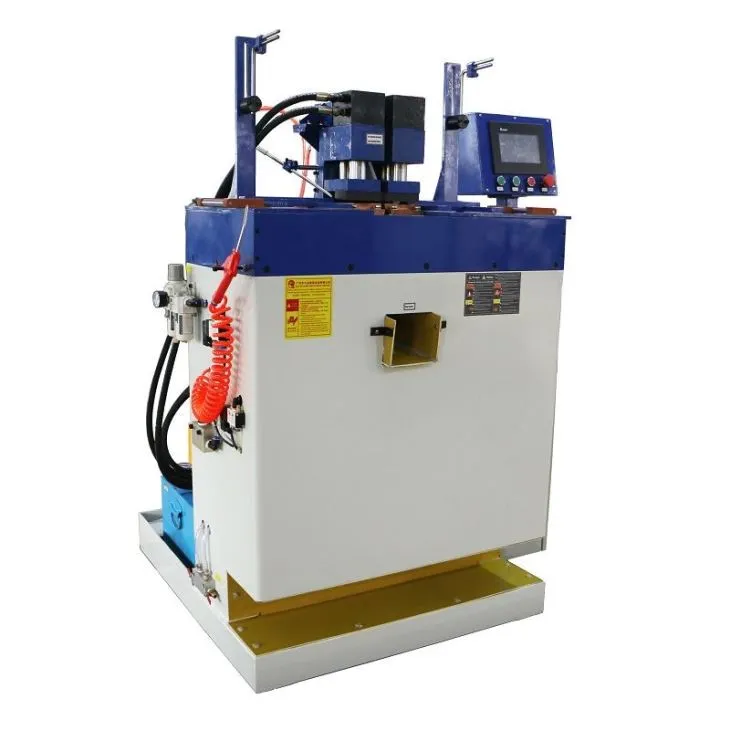

For more automated and high - volume production, we have advanced models that can handle different diameters and thicknesses of alloy steel bars. These machines are equipped with state - of - the - art control systems that can precisely adjust the welding parameters, ensuring consistent and high - quality welds.
We also have Bandsaw Blade Butt Welder which can be used for specific alloy steel applications, like joining bandsaw blades made of alloy steel, providing a reliable and efficient welding solution.
Conclusion
In conclusion, a steel bar butt welder can be used for welding alloy steel bars, but it requires careful consideration of the alloy's properties, proper adjustment of the welding parameters, and appropriate pre - and post - weld treatments. As a supplier, we are committed to providing our customers with the right equipment and support to achieve successful welding of alloy steel bars.
If you're in the market for a steel bar butt welder for your alloy steel bar welding needs, don't hesitate to get in touch. We're here to answer all your questions, offer expert advice, and help you find the perfect welder for your application. Whether you're a small workshop or a large - scale manufacturing facility, we've got you covered.
References
- "Welding of Alloy Steels," Metals Handbook Committee, ASM International.
- "Fundamentals of Welding Processes," John C. Lippold, David L. Kotecki.


