

How to train operators to use a Seam Welding Machine effectively?
Leave a message

As a supplier of Seam Welding Machines, I understand the significance of ensuring that operators can use these machines effectively. Seam welding is a crucial process in various industries, including automotive, aerospace, and manufacturing, where the quality of the weld can directly impact the performance and safety of the final product. In this blog, I will share some insights on how to train operators to use a Seam Welding Machine effectively.
Understanding the Seam Welding Machine
Before starting the training, it is essential to provide operators with a comprehensive understanding of the Seam Welding Machine. This includes its components, functions, and operating principles. A detailed orientation session can help operators familiarize themselves with the machine's control panel, welding heads, power supply, and cooling systems.
For instance, the Corner Seam Welding Machine is designed specifically for welding corners, and operators need to know how to adjust the machine to achieve the best results. Similarly, the TIG Longitudinal Seam Welding Machine uses Tungsten Inert Gas (TIG) welding technology for longitudinal seams, which requires a different set of skills and knowledge. The Circumferential Seam Welder is used for welding circular seams, and operators must understand its rotational mechanisms and welding parameters.
Safety Training
Safety should always be the top priority when operating any industrial machine, and Seam Welding Machines are no exception. Operators should be trained on the proper safety procedures, including wearing appropriate personal protective equipment (PPE) such as welding helmets, gloves, and safety glasses. They should also be aware of the potential hazards associated with seam welding, such as electric shock, arc flash, and fumes.
During the safety training, operators should learn how to inspect the machine before use, including checking for loose connections, damaged cables, and proper grounding. They should also be trained on how to handle emergencies, such as fire or electrical problems, and know the location of emergency stop buttons and first aid kits.
Theoretical Knowledge
In addition to understanding the machine and safety procedures, operators need to have a solid foundation in welding theory. This includes knowledge of welding processes, materials, and welding parameters. For example, they should understand the difference between resistance seam welding and TIG seam welding, and how the choice of welding process depends on the type of material being welded and the desired weld quality.
Operators should also learn about the properties of different metals and alloys, such as their melting points, thermal conductivity, and electrical resistance. This knowledge is essential for selecting the appropriate welding parameters, such as welding current, voltage, and speed, to achieve a high-quality weld.
Practical Training
Practical training is the most effective way to teach operators how to use a Seam Welding Machine. This involves hands-on experience with the machine under the supervision of an experienced trainer. During the practical training, operators should start with simple welding tasks and gradually progress to more complex ones.
The trainer should demonstrate the correct welding techniques, such as how to position the workpiece, how to adjust the welding heads, and how to control the welding speed. Operators should be given the opportunity to practice these techniques repeatedly until they can perform them confidently and accurately.
Quality Control
Quality control is an integral part of the seam welding process. Operators should be trained on how to inspect the welds for defects, such as cracks, porosity, and incomplete fusion. They should also learn how to use non-destructive testing methods, such as ultrasonic testing and X-ray inspection, to detect internal defects in the welds.
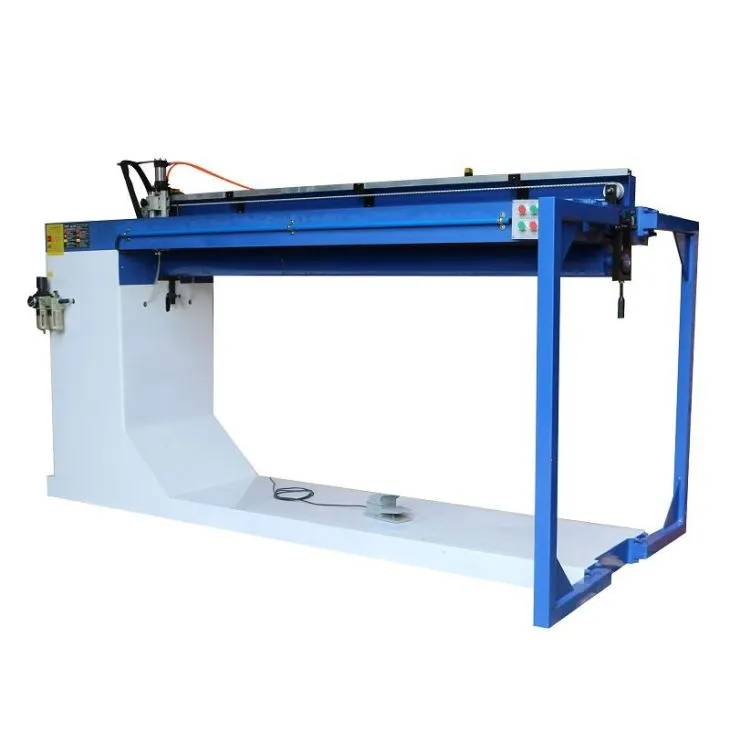

In addition to inspecting the welds, operators should be trained on how to maintain the quality of the welds by following the welding procedures and using the correct welding parameters. They should also be aware of the importance of record-keeping and documentation, such as maintaining welding logs and quality control reports.
Continuous Learning and Improvement
The field of welding technology is constantly evolving, and operators need to keep up with the latest developments. As a supplier, we should encourage operators to participate in continuous learning and improvement programs, such as attending welding seminars, workshops, and training courses.
We can also provide operators with access to technical resources, such as welding manuals, online tutorials, and technical support. By investing in the continuous learning and development of operators, we can ensure that they are equipped with the skills and knowledge needed to use our Seam Welding Machines effectively and produce high-quality welds.
Conclusion
Training operators to use a Seam Welding Machine effectively is a complex but essential process. By providing operators with a comprehensive understanding of the machine, safety procedures, welding theory, and practical skills, we can ensure that they are able to operate the machine safely and efficiently. Quality control and continuous learning are also crucial for maintaining the high standards of weld quality.
If you are interested in purchasing our Seam Welding Machines or need more information about our training programs, please feel free to contact us. We are committed to providing our customers with the best products and services, and we look forward to working with you.
References
- AWS Welding Handbook, American Welding Society
- Welding: Principles and Applications, Larry Jeffus
- Seam Welding Technology Manual, Industry Standard Publication


